

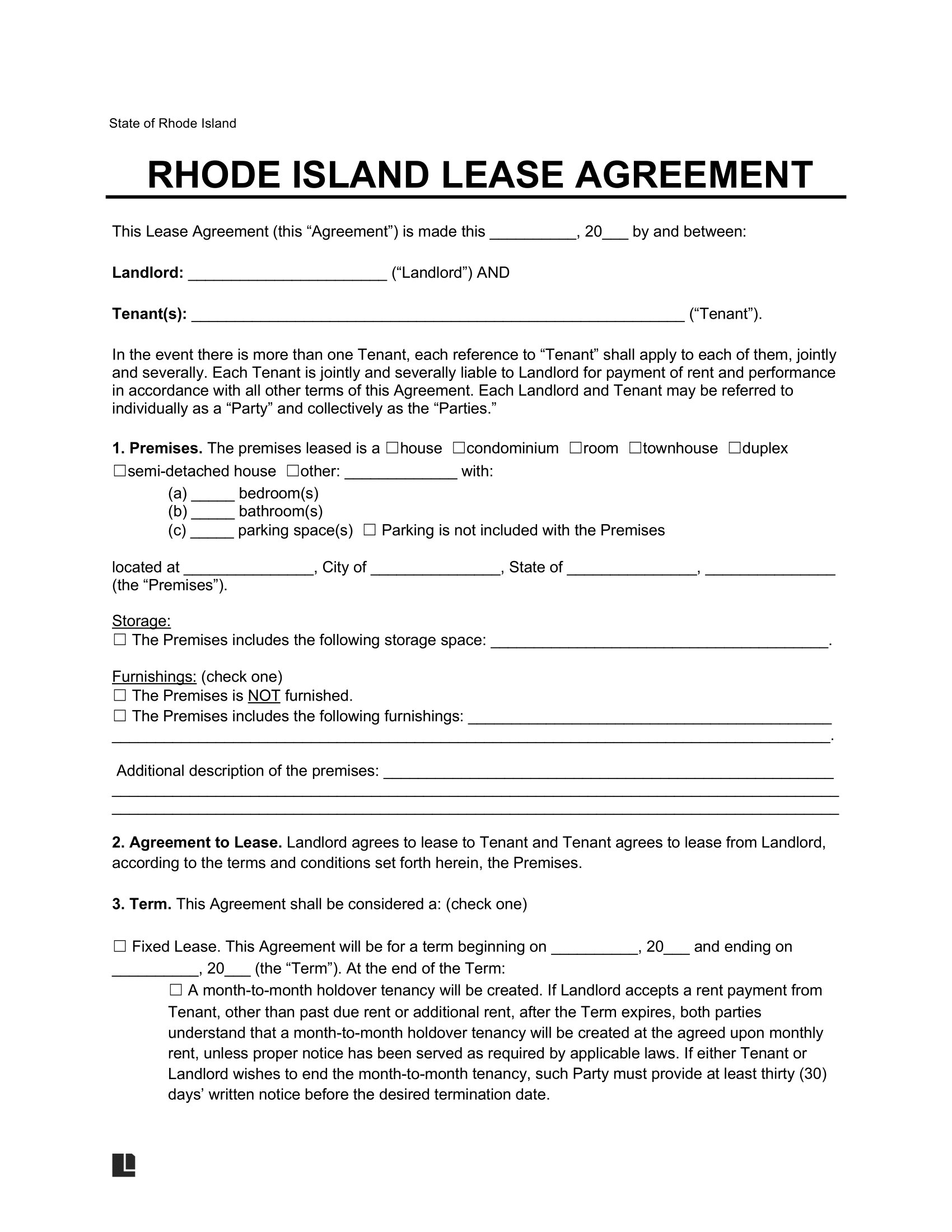
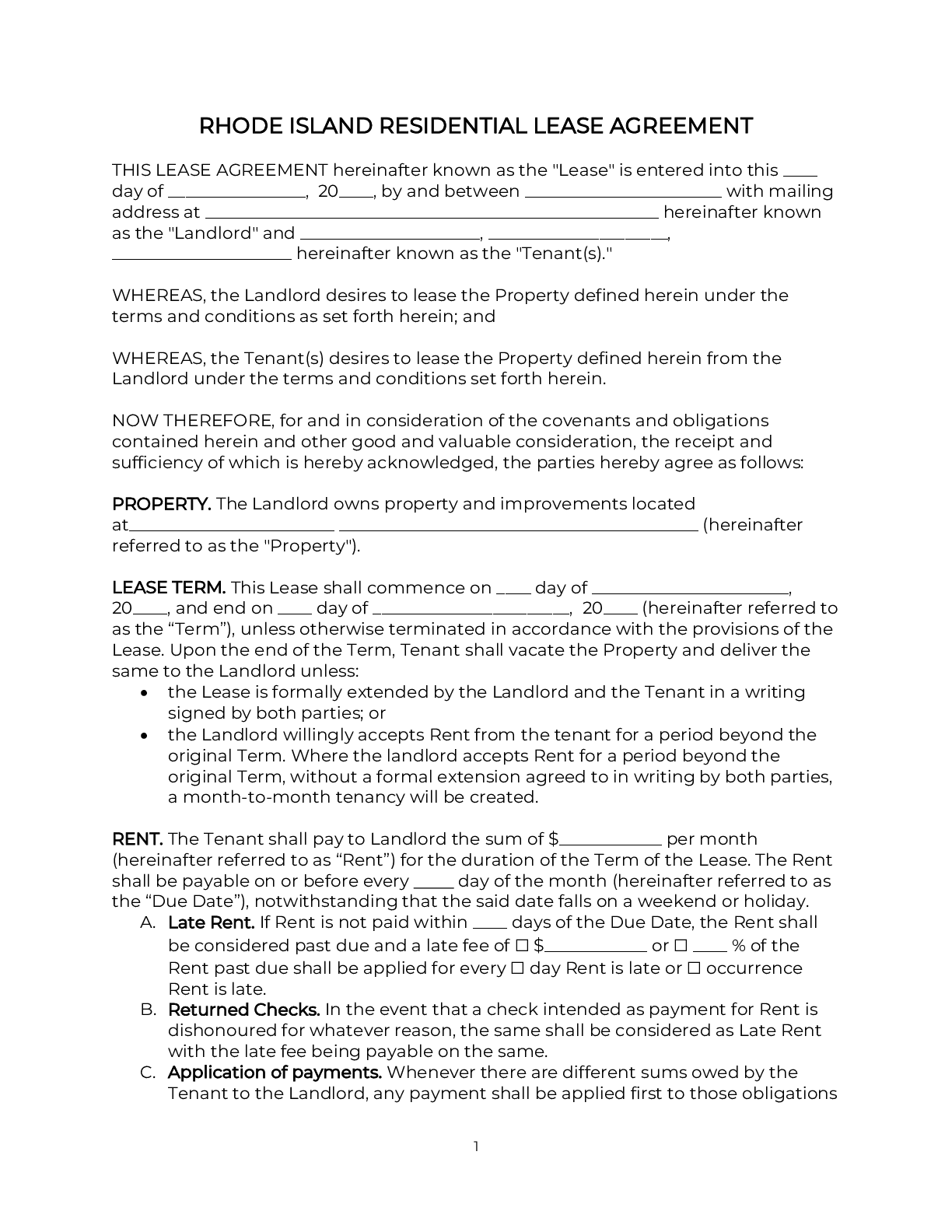
Rhode Island, though small in dimensions, has a unique unique laws and regulations regarding lease agreements. Whether you're a landlord or even a tenant, it's crucial to understand the specifics of lease agreements in this state to ensure a clean renting process. Here's all you could need to find out about rhode island residential lease agreement:
1. Forms of Lease Agreements:
Fixed-Term Lease: This sort of lease agreement specifies a definite period, usually annually, during which the tenant agrees to rent the property.
Month-to-Month Lease: In this arrangement, the lease automatically renews every month unless terminated by either party with proper notice.
2. Required Disclosures:
Landlords in Rhode Island are obligated to provide tenants with essential information, including lead-based paint disclosure for properties built before 1978, as mandated by federal law.
Additionally, landlords must disclose the name and address of the individual authorized to control the property.
3. Security Deposits:
Rhode Island landlords can collect a protection deposit, that will be capped at one month's rent for unfurnished units and one and a half month's rent for furnished units.
Landlords must return the security deposit within twenty-one days following the termination of the tenancy, along having an itemized set of any deductions.
4. Rent Increases:
You will find no specific statutes in Rhode Island governing rent increases, but landlords must provide tenants with at the very least thirty days' notice before raising the rent for month-to-month leases.
5. Repairs and Maintenance:
Landlords are responsible for maintaining a habitable living environment and making necessary repairs promptly.
Tenants are needed to keep the premises clean and notify the landlord promptly of any maintenance issues.
6. Termination of Lease:
Tenants must provide thirty days' written notice before terminating a month-to-month lease.
Landlords can terminate a lease for non-payment of rent, violation of lease terms, and other valid reasons but must provide proper notice depending on state law.
7. Eviction Process:
If a tenant fails to pay rent or violates the lease agreement, landlords must follow the legal eviction process, which typically involves serving a notice to stop and filing a complaint with the court if the tenant won't vacate.
Understanding Rhode Island's lease agreement laws is required for both landlords and tenants to make sure their rights and obligations are protected. Consulting with a legal professional can provide further clarity on specific issues related to lease agreements in the state.